17.3.12

The Root of Healthy Hair


It’s easy to forget that under all your hair is skin that needs care and attention — just like the rest of your skin. Taking care of your scalp pays off in the form of healthy, beautiful hair. The hair follicles are influenced by the health and blood supply of the surrounding tissue.


Avoid Irritating Ingredients

Any ingredient that dries out your skin will make an itchy scalp worse. Fatty alcohols are moisturizing, and can be identified by terms like stearylcetyl, and myristyl. The other alcohols are drying — for example, alcohol denat (denatured), ethanol, propanol, and isopropyl alcohol. You should check ingredients lists and avoid hair products that contain the drying alcohols.
Also, be mindful of menthol, an alcohol that has the cooling properties of peppermint — while it may invigorate normal scalps, it can provoke itching in sensitive scalps.
Salicylic acid is often included in products to treat flaking scalps, but it should not be used more than once a week because it can cause irritation instead of gentle exfoliation.

Don't Skip Shampooing

The growing trend of skipping washes to keep hair naturally hydrated is not only misguided but can do more damage than good. Thorough cleansing is critical for a healthy scalp; imagine how your face would look if you only washed it once a week. You should wash your scalp at least every two to three days for optimal health.
As for the claim that regular washing strips the scalp of essential oils, proper cleansing removes dirt, grime, and pollutants from hair — not moisture. Shampoos that are sulfate-free offer a gentler cleansing than harsh, detergent-containing ones. Also, look for silk and wheat proteins in ingredients lists — they're among the best additives to help your hair retain moisture and stay manageable.


Make Massage a Habit

Scalp massage promotes blood circulation, which stimulates hair follicles to produce thicker, more lustrous hair growth. Make it part of your shampoo routine. After applying shampoo, gently massage your fingertips over your scalp in a gentle kneading motion for about 30 seconds.
If your scalp is dry, consider a prewash massage with nurturing oils. Choose antioxidant-rich argan oil, grapeseed oil, or naturally antibacterial and soothing lavender oil. Before shampooing, work a few drops of oil into your scalp by slowly massaging with the pads of your fingers for a few minutes.


Feed Your Scalp

Like any other part of the body, your hair and scalp thrive when fed rich nutrients. Olive oil, which is rich in fatty acids, beta-carotene, and antioxidants, is one of the most hydrating ingredients to look for in hair care products. Olive oil softens scaling and moisturizes the scalp, creating conditions for optimum hair growth.
Vitamin E, which has been shown to improve scalp circulation, resulting in the stimulation of hair growth, is another effective ingredient. If you want to step up the game and go for professional help try scalp mesotherapy it helps to put vitamins and nutrients directly into the scalp improving circulation and straightening the weakened roots.


Find the Best Brush

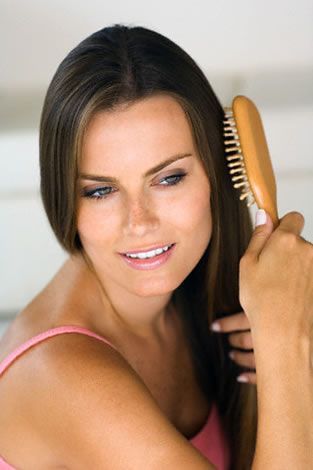
A brush can do more damage than a hair dryer if used incorrectly and too vigorously. Choose a brush made of soft, pliable plastic because plastic is far smoother and is kinder to hair than abrasive boar bristles and natural bristles. And look for a brush whose bristles are ball-tipped. Natural bristles are typically barbed at the ends and tightly packed which can cause unnecessary trauma to hair.
Vented brushes allow for smoother brushing and more even heat dispersion during blow-drying, allowing hair to dry faster and without “hot spots” that can burn the scalp and hair. Brush your hair lightly, and if possible, use a wide-toothed comb — the gentlest option of all. You can also look for the new generation of plastic combs at the drugstore; infused with hydrators like macadamia nut oil, they're particularly useful if your hair and scalp are dry and you’re prone to static and flyaways.


Use Sun Shields

The sun's dangerous UV rays are no friend to your skin — and that includes your scalp. Prolonged sun exposure can burn your scalp and cause itching from dehydration. Repeated exposure can dry out your hair and making it feel and look brittle, aging it the way sun exposure ages skin — giving it a coarser, dryer texture. Most importantly, you also need to guard against skin cancer — dangerous scalp moles often escape notice until it’s too late. If you part your hair while in the sun apply a waxy sunscreen stick or SPF lip balm to your part for protection.


10.3.12

No Surgery Nose Job


Traditionally a nose job is called rhinoplasty. The procedure involves incisions in the columella or nostrils and through these openings the surgeon manipulates cartilage and bone to straighten, shorten or slim the nose.

The Non surgical rhinoplasty is a procedure that uses dermal fillers to achieve reshaping of the nose without surgery. Downside of the procedure is that not all nose concerns can be addressed non-surgically. We can straighten the nose, lift the tip, remove any bumps but can’t reduce the size or height of nose.

What does a non surgical rhinoplasty procedure involve?
  • Topical numbing is applied for 20-30 min.s to help reduce the pain of the injections.
  • A dermal filler is injected under the skin to camouflage defects.
  • The results of the treatment are immediately visible.
  • The length of time results will last depends on individual factors but usually you’ll need to reinject after 1 year.
  • There is usually some swelling after the treatment and sometimes there are minor bruises, which go away in 1-2 weeks time.


What Treatments Are Suitable For A Non Surgical Approach?
  • A flat bridge: typical of Asian ethnicity dermal filler placement can create a subtle increase in height
  • Slightly crooked nose
  • Bump or hook on the bridge of the nose can be camouflaged
  • Nose that appears too large or too small in comparison with other facial features
  • Nose that is crooked or off-center
  • Nose that was injured so that the it is asymmetrical
  • Nose that needs refinement after surgical rhinoplasty


27.2.12

Vampire Face Lift


Vampire Face Lift is a new cosmetic procedure gaining a lot of popularity in the aesthetic circles. This procedure is designed to use a patient's own blood to rejuvenate his/her skin, muscles and SMAS. This procedure adds volume and rejuvenates the skin using different growth factors, bio stimulants and modulators found in and signaled by the patient’s own blood. It is an all natural procedure as, patient’s own blood is incorporated to rejuvenate and lift his/her face. There are no chances of allergic reactions or fear of foreign body interactions in response to these injections.


What happens during a Vampire Face Lift?

First a patient's blood is drawn, typically from the arm. Then the blood draw is put into a centrifuge to separate the red blood cells from the platelets in the plasma. The red blood cells are discarded at the end of the centrifugation process and the plasma and platelets are saved. The golden liquid is loaded into syringes and used to inject into the facial tissues in different planes.


How does Vampire Face Lift work?

The beauty of the Vampire Lift is we're taking your own blood product - the platelets rich plasma- that when injected back into the face, creates a growth factor system that pulls in all these other cells to help rejuvenate the face.
PRP has been used for many years, but is just now finding it's rightful place as a free standing procedure. It's been used by orthopedists to stimulate bone growth and plastic surgeons have used it in the past to improve healing following surgeries like facelift and breast augmentation. The Vampire Facelift makes use of PRP as an injection underneath the skin to help stimulate the rejuvenation properties of the skin. Platelets have growth factors and stem cells that are concentrated and these growth factors stimulate new collagen formation, new blood cell formation and new elastin formation, as well as other processes that we don't quite understand yet.

What to expect after Vampire Face Lift?

It is a quick, simple and easy way to rejuvenate the face area. It makes your look more rested, there is no cutting or surgery and it can be done within an hour. Patients are really enjoying the results. Not only are wrinkles reduced but their skin is more vibrant and youthful looking. It can be used in thin tissue, such as that around the eyes and healing is fast, much quicker than with the more dramatic traditional facelift.


Patients can expect some mild swelling and bruising for around 3-4 days, so while a patient is certainly healthy enough to return to work, they may want to avoid social situations. Final results can be seen in about 4-6 weeks, and results should last around a year, but that it's a little early in the procedure's infancy to say precisely how long they'll last. Dr. Sherman goes on to say, "We also do not know how many injections are necessary to reach the optimal results. We do know that some patients respond better than others and consequently, patients may need 2-5 treatments, once a month or every 6 weeks to build up the optimal effect of the rejuvenation properties."
Anyone who is on blood thinners would not be a candidate for this procedure.

20.2.12

Low Level Laser Treatment For Hair Loss


The loss of hair (alopecia) is a natural phenomenon in all hair-baring animals that normally occurs during the hair growth cycle. It is estimated that most individuals (assuming they have a full head of hair) lose about 100 scalp hairs over a 24-hour period. Hair loss can become a cosmetic problem when it occurs in the wrong place at the wrong time in the wrong individual. True hair loss should be distinguished from damage to the hair shaft, which may cause breakage close to the scalp. This sort of damage is most often caused by exogenous chemicals used to alter the physical characteristics of the hair shaft (use of hair dye, use of hot hair straightening devices, over zealous blow-drying, etc.), but certain genetic diseases can also alter hair shaft strength and durability.

Many treatment options are available to help alopecia ranging from: hormonal therapies, mesotherapy, nutritional supplementations, localized treatments with shampoos and lotions to hair grafting.

Past few years a new option in hair restoration has been gaining popularity that is painless and noninvasive. The use of Low level laser therapy (LLLT) has been found to stimulate microcirculation, decrease inflammation, improve cellular metabolism and protein synthesis. European studies suggest that LLLT increases blood and lymph circulation at the hair roots and stimulates follicular cells, which may cause hair to grow in thicker and stronger.  Recent studies in the U.S. have also shown positive effects on hair growth (including increases in hair density). More studies, evaluating the effectiveness of LLLT in the treatment of hair loss, are still underway. In January of 2007, the FDA granted clearance to the first hand-held low level laser device for the treatment of hair growth. In the FDA summary, the FDA noted that the low level laser device was capable of promoting hair growth in men with 'androgenetic alopecia' (male pattern hair loss).


To understand how LLLT works, you have to alter the way you view lasers. LLLT isn’t a light source that causes thermal, or heat, damage. With LLLT, there is no cutting or burning sensation. The technology doesn’t even resemble the look of traditional lasers. Instead, LLLT is delivered by a device that contains panels of lasers that shine on the scalp. Men and women being treated for hair loss sit comfortably under the lasers as it gently delivers the phototherapy to the scalp. Most of the patients read a magazine during treatments. There is no pain or discomfort from the therapy--some patients do report some "scalp-tingling."
The visible red light from the hood’s lasers travels several layers into the tissue without harming the skin and scalp. Because the laser light does not cut or burn the skin, the therapeutic light-energy is absorbed by the cells and the process of cell repair begins. One theory of how this noninvasive, non-chemical hair loss treatment works is that it stimulates the production of energy at the cellular level; therefore, improving cell function.
It is believed that LLLT may increase blood flow to the treated area as well. European studies have shown that LLLT stops hair loss in 85% of cases and stimulates new hair growth in 55% of cases.

Treatment Protocol:
Successful LLLT (Low Level Laser Therapy) requires that patients be committed to the 12-month therapy program.
Treatment starts with three 15-minute sessions per week for the first four weeks; then two 15-minute weekly sessions for 8 weeks; followed by once a week maintenance therapy for the remainder of the regimen.  Some patients taper down to one treatment per month.
Physicians also recommend that patients having the therapy are careful to create the best environment for hair growth. This includes using correct hair care products that are free of chemicals, water to wash their hair that is free of chlorine, and nutritional supplements to fortify hair follicle metabolism.

For patients who cannot do regular sessions at the doctor’s office there are home use devices available. With proper training they can follow the regimen at home.


Patients who have used the therapy have said that their hair looks and feels thicker, fuller and healthier and they have noticed improved hair growth. As mentioned previously, Laser Therapy is no 'miracle cure' for hair loss. For best results, a visit with a qualified hair restoration physician who can evaluate your condition, make treatment recommendations and evaluate your progress, is highly recommended. One thing to remember regardless of the treatment regimen recommended, the highest degree of satisfaction is obtained when a patient's expectations are closely in-line with what the treatment can realistically provide.

12.2.12

Bee Stings Or Botox?


To Bee or not to Bee? That’s the newest anti-aging  question.


ACTRESSES and celebrities have long championed bizarre ingredients – from snake poison, nightingale poop, to sheep’s placenta – in an attempt to look youthful and flawless.

Yet another anti-aging cream with a bizarre secret ingredient has hit the markets. This time, the surprising additive may make some cringe - bee stings. The new cream, known as Manuka Doctor, is creating quite the buzz in the aesthetic markets - but does it work?


According to the manufacturer, each pot of Manuka Doctor contains more than 10,000 bee stings. The poison in the sting is believed to help slow the aging process and improve skincare. Since it hit shelves, sales of the cream are up 3,000 percent.

Some are calling the cream "nature's alternative to Botox," according to the news source, as it is rumored to stimulate collagen growth and the renewal of cells. But while trendy creams and lotions may generate a lot of chatter in the media, few can stand up to the time-tested results garnered from Botox and other injectable cosmetics.

Although the facts are dicey, members of the Royal Family like Camilla Parker Bowles, Duchess of Cornwall and the new Duchess of Cambridge, Kate Middleton have been reported to swear by it. Other celebs like Victoria Beckham and Kylie Minogue have also joined the beauty bandwagon. They are reportedly hooked on it with quiet fondness. Manuka Doctor from New Zealand has become the first brand to bring so-called “Bee Venom” technology to the high street. Lets see if more brands will follow or not?

5.2.12

Pre Wedding Preps!


Getting married this year? Here's some skincare, and make-up tips you'll need.

Preparing for your wedding beauty is a confusing business. Do you apply your own make-up or hire an artist? When do you spray tan? Should you buy a new perfume or wear one your future husband already adores? And how do you make sure you’re spot free on the big day? From skincare and make-up to fragrance and nails, here are some expert tips you need to ensure you’re the most beautiful bride you can be.

Beauty is Only Skin Deep: Start a course of facial and body  treatments 3 – 6 months prior to the wedding, this will allow your skin to acclimatize and show improvement in time for the big day. 
If your skin lacks luster and turgidity try radio-frequency treatments to tighten and tone the skin. Vitamin infusion with mesotherapy helps to achieve radiance and lustre for the otherwise lifeless skin.
Mild peels coupled with the above mentioned treatment work wonders for the dull complexion. All these treatments are already a norm for the star celebs before the award seasons. So, if you have the budget splurge and spoil yourself to a star-style radiant face and body.

Problem Skin: If you suffer from acne and blemishes, you should treat your skin gently with some light peels and by using a light salicylic acid product at home on the problem areas, but stick to anti-aging skincare elsewhere to prevent drying the skin out.
Blue LED light treatment helps clear skin bacteria and give you spotless skin, couple them with a light salicylic acid peels to achieve maximum benefit. 

For eczema use omegas, start taking a 6000 mg combination of half flax and half fish oils, whilst looking for skincare products containing GLA rich oils such as borage, meadow-foam and hemp seed.

Flax seed oil also works wonders for adding radiance to dull complexions, as does weekly exfoliation and regular daily facial massage (do it when you apply your night cream) to stimulate circulation.

Shine Control: If you suffer from excess shine – use products with Vitamin A and salicylic acid to work on balancing the sebum production Babe AKN acne cleanser, toner and mask help achieve nice results.  Also, cut out sugars, fizzy drinks and reduce dairy, but eat plenty of good fats. Make sure to keep the skin hydrated by drinking plenty of water and also using a good moisturizer – don’t ignore moisture as an oily skin can be lacking in it.  And always keep blotting papers to hand.


Retinol for Radience: A ‘six week controlled application of retinol at-home is a powerful method of achieving glowing skin before your wedding.  Use Skinceuticals Retinol 0.3, or Pharmagel’s  Bio A over six weeks, gradually increase the frequency of applications from 2 times per week to 3-4 times per week before the wedding to allow your skin to become adjusted to the treatment.  Retinol gives amazing results by speeding up cell renewal in skin, but it is important to use it correctly to get good results. Proper use of moisturizers is vital while using retinol products. To combat redness accompanied with retinols try a vitamin K based moisturizer, "Hydravital Factor K" from Mesoestetic is something I use in my practice.

Eye Bags: Stress and tension of planning for the big day can reek havoc for the eyes. Eyes are the first area that show stress in the form of bags, puffiness and dark circles. Drink plenty of water to help avoid bags under the eyes. Light drainage massage with fingertips is key while applying eye products; try Babe Eye contour cream kept in the fridge. Also, soak cotton pads in rosewater and store in the fridge to cool and use the day before and on the morning of the wedding. A little help from the pharmacy: AminoGenesis "Gone in sixty seconds" can erase any bags or wrinkles instantly. You can wear "Gone in sixty seconds"on top or under your make up for an instant lifting effect.

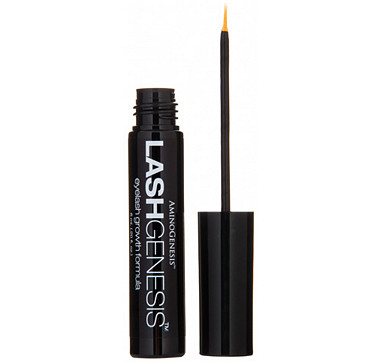
Lovely Lashes: Long curly eyelashes really give you the glamour effect. If you’re worried about smudged mascara post-vows, go for lash extensions. Opt for a look as close to natural as possible.  If you want your natural lashes enhanced try "LashGenesis" from AminoGenesis. It helps grow naturally long lashes start using it every night 4-6 weeks prior to your big day. On your wedding day you’ll be pleasantly surprised  with your own natural long luscious lashes.

Last minute Rescue: If you wake up on the morning of your wedding with a spot, reduce any swelling immediately with an ice cube wrapped in clean muslin.   If there is a head on the spot, only then gently extract, covering finger tips with tissue, making sure to have opened the pores up first in the bath or shower. Next, apply Skinceuticals clarifying clay mask. Use more ice on the area after to calm and settle further. Babe spot control will zap the zit in the bud, apply twice daily just on the spot.

Makeup Inspiration: Always pick your make-up once dress, hair and flowers have been chosen! Not so much to ‘match’ your make-up but to inspire a look. For instance, if the bride's bouquet has little touches of plum shades, make-up can be kept extremely natural with shades of pink, beige and light brown, but you could choose to lightly underline eyelashes with a dark plum shade to ‘marry’ the look.
Really formulate an idea in your head of what you would like your make up to be like on the day. Start by tearing out images that you love from any magazine, don't restrict yourself to just bridal magazines – ‘red carpet’ make-up is amazing for inspiration because the make-up is defined, flawless and just beautiful.
On your wedding day you should look like the best version of yourself possible.  Think of it as getting ready for the biggest party of your life rather than trying to change your usual look, otherwise you may end up feeling uncomfortable and not ‘yourself.
I believe that bridal make-up should be subtle and unobtrusive, yet reveal and enhance everything that’s most beautiful about your face. Whatever look you choose for your big day, it’s essential that you look like you and that the photos won’t look dated in a few years.

Pucker Up Your Pout: If you're born with naturally small lips you can use a doctor's help to plump up the lips with some hyaluronic acid fillers. Good make-up can help giving the illusion of slightly fuller lips too, draw outside the lips with a pencil and finish off with a lip color and gloss.
Instant lip plumpers can also help. They do the plumping trick in minutes without any needles invilved and you can enjoy sexy plump pout for few hours. I recommend Lips-To-Love by AminoGenesis.

Lock Down Your Make up: Remember longevity is the key and there are some ways of ensuring your make up lasts if you are doing your own on the day. Use an oil-free moisturizer, followed by a primer that ‘locks down’ your foundation. Apply concealer over your foundation and blend. Finally set with a translucent powder.


Finding A Fragrance: Find your perfume way ahead of the big day. You don't want to experiment with something new. Spray some on inner wrist and let it sit for few hours, see how it blends with your natural body odor. Make sure you're not allergic to the perfume. If you've a history of allergic reactions to perfume find something which you're not reactive to, don't apply it on your body directly apply it on your dress few minutes before putting it on.
Instant way to stand out in a crowd and smell individual is to use a combination of your favorite fragrances on different parts of your body.
Always wear something warm and spicy down the front part of your body and spritz something sweet in your hair.  You will smell absolutely amazing and no one will be able to identify what you’re wearing!

Mani s and Pedis: Don’t neglect your hands and feet. Get monthly mani and pedi's pre 'big day'. Just don’t go crazy filing off too much dry skin from the feet as it’s there for a reason - to protect, especially against the beautiful new shoes you may be wearing for the 10+ hours of your big day!


30.1.12

Lipo or Lifestyle?


Last week was liposuction week for me. We sucked 30 liters of fat from 6 ladies in one week. That’s a lot!! So, I decided to dedicate today’s blog to focus on diet and exercise…..Healthy living!! A lifestyle to be lived by on daily basis and not a one or two month diet cycle fad.

Your ideal daily calorie intake depends upon various factors such as your age, activity level and whether you are trying to lose, gain or maintain weight. During the past two decades obesity has doubled in the first world countries where indulgence with excess is a lifestyle and obesity its serious consequence. If people do not start taking action now they will experience reduced life expectancy.

It doesn't matter how big you are most can afford to lose some weight, even a modest loss of ten pounds has tremendous health benefits. To achieve this you need to find your balance between food intake and physical activity and each of us will have a different equation to deal with. As I say to most of patients during liposuction/lipocontouring consults: "To lose weight you need to eat less and move more." There are no secrets, just follow that simple rule.

Fifty years ago life for most people consisted of much activity and it didn't matter what you ate because you would exercise away excess calories. For many today life has become a very static experience that consists of long hours at work in front of a computer, a drive home and so tired that there is just enough energy remaining to eat and then sleep. It is no surprise that we're getting fatter.

Now for the good news

You don't have to give up your favorite meals to lose weight. You do need to exercise a little more each day and be aware of portion sizes that you eat. It is a fair assumption that people in the developed nations can afford to reduce calorie intake by about 300 per day. In less developed countries where people are more active in their daily lives this figure will be considerably lower, but they are unlikely to have an obesity problem anyway.

Eat Healthy:
  1. Avoid fast and high sodium foods
  2. Eat Plenty of vegetables
  3. Avoid sugary drinks
  4. Drink plenty of water (10-15 glasses daily)
  5. Start with a salad, protein and lastly carbs or sugars


Exercise values:

For a person who weighs 155 pounds (77 kilograms) the following calorie burn-off rate applies for each 1 hour of exercise:

Light exercise:
Hiking 60 min.s = 480 calories
Walking and carrying weight - 1-2 hr.s = 330 calories
Stretching exercises 30 min.s = 139 calories
Heavy exercise:
Jogging 40min.s = 328 calories
Bicycling 12-14mph = 530 calories
Aerobics high impact 40 min.s = 329 calories
Aerobics low impact 40 min.s =  285 calories

Note: If you weigh over 155 pounds the calorie burn-off will be greater, below 155 pounds the burn-off lesser. There is no accurate science that applies to each individual. For your own weight calculations go to: http://www.healthstatus.com/cgi-bin/calc/reload.pl

To lose weight and keep it off you should aim at losing one pound (450 grams) each week and to lose one pound you must reduce your present calorie intake by 3,500 calories. How you achieve it is up to you. I suggest 300 less calories each day in your food intake and burn an extra 200 calories each day through physical activity. As you become fitter you will find this ratio reversing.