28.3.12

Is Your Manicure Safe?


The manicure is being updated with longer-lasting polishes, strengthening treatments  and lots of glitz and glamour. Big question is are these new developments safe? 

Here is a short dermatological review of what to expect and what to look for during a safe mani or pedi to ensure, you are doing it safely.


Is There Any Danger Of Harmful Chemical Exposure?


With new trends in nail aestherics, consumers are revisiting concerns about safety. Some polish manufacturers make a point of stating that their formulations do not contain certain ingredients—for example:
Toluene: a liquid solvent. It helps nail polish go on smoothly and adhere evenly to the nail. Toluene has been linked to air pollution hence, its not that readily present in product available in the first world markets.
DBP: a plasticizer, that was phased out years ago. It acts as a binder to improve the lasting power of nail lacquer and prevent chips and cracks.  It is toxic and known to cause cancer, developmental and reproductive toxicity, allergies and immunotoxicity, organ toxicity, skin/eye/lung irritation, neurotoxicity, endocrine disruption and persistence and bioaccumulation in wildlife.
Formaldehyde: it is used in some nail hardeners to make the polish tough and resilient  It is toxic and is known to cause cancer, developmental and reproductive toxicity, allergies and immunotoxicity, occupational hazards, organ system toxicity, skin/eye/lung irritation and biochemical or cellular level changes.
Methyl Methacrylate: is used in gel manicures. Over the last couple of years, the gel manicure has grown in popularity: Two-thirds of salons now offer the service, which is supposed to provide the long wear of an acrylic without the accompanying nail damage. Be wary of too-good-to-be-true prices. It might indicate use of the bonding liquid methyl methacrylate (MMA), which is much cheaper than the alternative ethyl methacrylate (EMA). Industry observers say MMA is still being widely used for traditional acrylic nails. It’s a powerful adhesive, a technician must aggressively file your nail to get it off.  That’s a threat to consumers. On a weekly basis, women are getting damaged nails and infections.

What about the dangers of UV exposure during drying? 


A case study by Austin-based University of Texas researchers in the "Archives of Dermatology" in April 2009 reported that two women developed non-melanoma skin cancer on the tops of their hands from exposure to nail lamps. Both women were middle-aged, otherwise healthy, and had no cancer history. This does not prove that UV nail lamps definitely cause skin cancer; larger clinical studies will be necessary to determine a link. Word of advice use UV nail lamps in as limited a fashion as possible. Another option may be to look for a salon that uses LED (light emitting diode) instead of UV dryers. 

How About Risk Of Developing Allergies?


Manicures have been linked to allergic reactions in people. An allergy may be aggravated, because of chemicals normally present in most nail products. Products that can trigger off allergies are – nail polish, nail hardeners, base coats, top coats and artificial nails. Common allergic reactions that are usually observed with mani pedi's include – inflammation, itchiness, redness of the skin and a burning sensation. These allergic reactions normally take place in the area below the nail. In some cases, they could also affect a person’s face and neck. Other problems associated with manicures are – brittle nails, stains and discolored nails.

How About Risk Of Fungal And Bacterial Infections?


Use of EMA and aggressive filing increases the risk of developing nail infections during a manicure.
Since manicure and pedicure tools can become contaminated with bacteria, fungi and blood-borne viruses such as HIV, hepatitis B or hepatitis C, it is important that these tools are cleaned and disinfected using proper sterilization procedures prior to reuse. Or depending on the tool; some tools should be disposable and should not be reused.

You should always ask at your salon if they disinfect their tools sufficiently, so you are not at risk for bacterial and fungal infections. If you’re unsure, ask about sterilization methods (an establishment that takes infection control seriously should be eager to tell you about it).
If you’re still skeptical, bring your own tools or find a salon that offers each client a separate set.
Regardless of the tools used, avoid having your cuticles trimmed since that can promote infection. And contact your physician if your fingers burn, itch, sting, or turn red after a manicure.

Signs of Fungal Infection:

Nail fungal infections usually start off as a white or yellow spot at the tip of the nail. Later, as the fungus spreads, the nail may become discolored, thicken, lose luster and shine, change in shape and develop crumbling edges. For some people, it may also cause pain, odor or separation of the nail from the nail bed.


What should I expect from my nail technician?


  • If an infection is suspected on your skin or nails, you should be denied service and be advised to see a doctor. 
  • A nail technician should never provide you with treatment for nail mould or fungus.
  • The nail technician should be willing to answer all your questions about the procedure and any infection prevention steps taken.
  • The salon should be well-lit, clean and tidy.


19.3.12

Vitamin A May Play Role in Reducing Rates of Melanoma


The Journal of Investigative Dermatology (JID) recently published an article online that reveals that supplementation with retinol, a type of vitamin A, may play a role in reducing melanoma rates among women.
According to the study authors, who are affiliated with Kaiser Permanente Northern California, previous research has demonstrated that intake of vitamin A and carotenoids may have chemopreventive benefits against melanoma. 
The researchers followed 69,635 men and women for an average of 5.84 years with follow-up visits, during which 566 cases of incident melanoma were identified. According to the study abstract in JID, “Baseline use of individual retinol supplements was associated with a significant reduction in melanoma risk (HR: 0.60; 95% CI: 0.41–0.89).” High-dose retinol supplementation was also associated with a reduction of melanoma risk (HR: 0.74; 95% CI: 0.55–1.00) in comparison to non-users. The authors also found that the reduction in risk of melanoma was stronger in sun-exposed sites.
No association between melanoma risk and dietary or total intake of vitamin A or carotenoids was observed. The researchers concluded: “Retinol supplementation may have a preventative role in melanoma among women.”

17.3.12

The Root of Healthy Hair


It’s easy to forget that under all your hair is skin that needs care and attention — just like the rest of your skin. Taking care of your scalp pays off in the form of healthy, beautiful hair. The hair follicles are influenced by the health and blood supply of the surrounding tissue.


Avoid Irritating Ingredients

Any ingredient that dries out your skin will make an itchy scalp worse. Fatty alcohols are moisturizing, and can be identified by terms like stearylcetyl, and myristyl. The other alcohols are drying — for example, alcohol denat (denatured), ethanol, propanol, and isopropyl alcohol. You should check ingredients lists and avoid hair products that contain the drying alcohols.
Also, be mindful of menthol, an alcohol that has the cooling properties of peppermint — while it may invigorate normal scalps, it can provoke itching in sensitive scalps.
Salicylic acid is often included in products to treat flaking scalps, but it should not be used more than once a week because it can cause irritation instead of gentle exfoliation.

Don't Skip Shampooing

The growing trend of skipping washes to keep hair naturally hydrated is not only misguided but can do more damage than good. Thorough cleansing is critical for a healthy scalp; imagine how your face would look if you only washed it once a week. You should wash your scalp at least every two to three days for optimal health.
As for the claim that regular washing strips the scalp of essential oils, proper cleansing removes dirt, grime, and pollutants from hair — not moisture. Shampoos that are sulfate-free offer a gentler cleansing than harsh, detergent-containing ones. Also, look for silk and wheat proteins in ingredients lists — they're among the best additives to help your hair retain moisture and stay manageable.


Make Massage a Habit

Scalp massage promotes blood circulation, which stimulates hair follicles to produce thicker, more lustrous hair growth. Make it part of your shampoo routine. After applying shampoo, gently massage your fingertips over your scalp in a gentle kneading motion for about 30 seconds.
If your scalp is dry, consider a prewash massage with nurturing oils. Choose antioxidant-rich argan oil, grapeseed oil, or naturally antibacterial and soothing lavender oil. Before shampooing, work a few drops of oil into your scalp by slowly massaging with the pads of your fingers for a few minutes.


Feed Your Scalp

Like any other part of the body, your hair and scalp thrive when fed rich nutrients. Olive oil, which is rich in fatty acids, beta-carotene, and antioxidants, is one of the most hydrating ingredients to look for in hair care products. Olive oil softens scaling and moisturizes the scalp, creating conditions for optimum hair growth.
Vitamin E, which has been shown to improve scalp circulation, resulting in the stimulation of hair growth, is another effective ingredient. If you want to step up the game and go for professional help try scalp mesotherapy it helps to put vitamins and nutrients directly into the scalp improving circulation and straightening the weakened roots.


Find the Best Brush

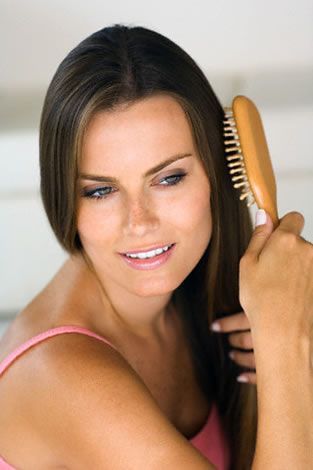
A brush can do more damage than a hair dryer if used incorrectly and too vigorously. Choose a brush made of soft, pliable plastic because plastic is far smoother and is kinder to hair than abrasive boar bristles and natural bristles. And look for a brush whose bristles are ball-tipped. Natural bristles are typically barbed at the ends and tightly packed which can cause unnecessary trauma to hair.
Vented brushes allow for smoother brushing and more even heat dispersion during blow-drying, allowing hair to dry faster and without “hot spots” that can burn the scalp and hair. Brush your hair lightly, and if possible, use a wide-toothed comb — the gentlest option of all. You can also look for the new generation of plastic combs at the drugstore; infused with hydrators like macadamia nut oil, they're particularly useful if your hair and scalp are dry and you’re prone to static and flyaways.


Use Sun Shields

The sun's dangerous UV rays are no friend to your skin — and that includes your scalp. Prolonged sun exposure can burn your scalp and cause itching from dehydration. Repeated exposure can dry out your hair and making it feel and look brittle, aging it the way sun exposure ages skin — giving it a coarser, dryer texture. Most importantly, you also need to guard against skin cancer — dangerous scalp moles often escape notice until it’s too late. If you part your hair while in the sun apply a waxy sunscreen stick or SPF lip balm to your part for protection.


10.3.12

No Surgery Nose Job


Traditionally a nose job is called rhinoplasty. The procedure involves incisions in the columella or nostrils and through these openings the surgeon manipulates cartilage and bone to straighten, shorten or slim the nose.

The Non surgical rhinoplasty is a procedure that uses dermal fillers to achieve reshaping of the nose without surgery. Downside of the procedure is that not all nose concerns can be addressed non-surgically. We can straighten the nose, lift the tip, remove any bumps but can’t reduce the size or height of nose.

What does a non surgical rhinoplasty procedure involve?
  • Topical numbing is applied for 20-30 min.s to help reduce the pain of the injections.
  • A dermal filler is injected under the skin to camouflage defects.
  • The results of the treatment are immediately visible.
  • The length of time results will last depends on individual factors but usually you’ll need to reinject after 1 year.
  • There is usually some swelling after the treatment and sometimes there are minor bruises, which go away in 1-2 weeks time.


What Treatments Are Suitable For A Non Surgical Approach?
  • A flat bridge: typical of Asian ethnicity dermal filler placement can create a subtle increase in height
  • Slightly crooked nose
  • Bump or hook on the bridge of the nose can be camouflaged
  • Nose that appears too large or too small in comparison with other facial features
  • Nose that is crooked or off-center
  • Nose that was injured so that the it is asymmetrical
  • Nose that needs refinement after surgical rhinoplasty


27.2.12

Vampire Face Lift


Vampire Face Lift is a new cosmetic procedure gaining a lot of popularity in the aesthetic circles. This procedure is designed to use a patient's own blood to rejuvenate his/her skin, muscles and SMAS. This procedure adds volume and rejuvenates the skin using different growth factors, bio stimulants and modulators found in and signaled by the patient’s own blood. It is an all natural procedure as, patient’s own blood is incorporated to rejuvenate and lift his/her face. There are no chances of allergic reactions or fear of foreign body interactions in response to these injections.


What happens during a Vampire Face Lift?

First a patient's blood is drawn, typically from the arm. Then the blood draw is put into a centrifuge to separate the red blood cells from the platelets in the plasma. The red blood cells are discarded at the end of the centrifugation process and the plasma and platelets are saved. The golden liquid is loaded into syringes and used to inject into the facial tissues in different planes.


How does Vampire Face Lift work?

The beauty of the Vampire Lift is we're taking your own blood product - the platelets rich plasma- that when injected back into the face, creates a growth factor system that pulls in all these other cells to help rejuvenate the face.
PRP has been used for many years, but is just now finding it's rightful place as a free standing procedure. It's been used by orthopedists to stimulate bone growth and plastic surgeons have used it in the past to improve healing following surgeries like facelift and breast augmentation. The Vampire Facelift makes use of PRP as an injection underneath the skin to help stimulate the rejuvenation properties of the skin. Platelets have growth factors and stem cells that are concentrated and these growth factors stimulate new collagen formation, new blood cell formation and new elastin formation, as well as other processes that we don't quite understand yet.

What to expect after Vampire Face Lift?

It is a quick, simple and easy way to rejuvenate the face area. It makes your look more rested, there is no cutting or surgery and it can be done within an hour. Patients are really enjoying the results. Not only are wrinkles reduced but their skin is more vibrant and youthful looking. It can be used in thin tissue, such as that around the eyes and healing is fast, much quicker than with the more dramatic traditional facelift.


Patients can expect some mild swelling and bruising for around 3-4 days, so while a patient is certainly healthy enough to return to work, they may want to avoid social situations. Final results can be seen in about 4-6 weeks, and results should last around a year, but that it's a little early in the procedure's infancy to say precisely how long they'll last. Dr. Sherman goes on to say, "We also do not know how many injections are necessary to reach the optimal results. We do know that some patients respond better than others and consequently, patients may need 2-5 treatments, once a month or every 6 weeks to build up the optimal effect of the rejuvenation properties."
Anyone who is on blood thinners would not be a candidate for this procedure.

20.2.12

Low Level Laser Treatment For Hair Loss


The loss of hair (alopecia) is a natural phenomenon in all hair-baring animals that normally occurs during the hair growth cycle. It is estimated that most individuals (assuming they have a full head of hair) lose about 100 scalp hairs over a 24-hour period. Hair loss can become a cosmetic problem when it occurs in the wrong place at the wrong time in the wrong individual. True hair loss should be distinguished from damage to the hair shaft, which may cause breakage close to the scalp. This sort of damage is most often caused by exogenous chemicals used to alter the physical characteristics of the hair shaft (use of hair dye, use of hot hair straightening devices, over zealous blow-drying, etc.), but certain genetic diseases can also alter hair shaft strength and durability.

Many treatment options are available to help alopecia ranging from: hormonal therapies, mesotherapy, nutritional supplementations, localized treatments with shampoos and lotions to hair grafting.

Past few years a new option in hair restoration has been gaining popularity that is painless and noninvasive. The use of Low level laser therapy (LLLT) has been found to stimulate microcirculation, decrease inflammation, improve cellular metabolism and protein synthesis. European studies suggest that LLLT increases blood and lymph circulation at the hair roots and stimulates follicular cells, which may cause hair to grow in thicker and stronger.  Recent studies in the U.S. have also shown positive effects on hair growth (including increases in hair density). More studies, evaluating the effectiveness of LLLT in the treatment of hair loss, are still underway. In January of 2007, the FDA granted clearance to the first hand-held low level laser device for the treatment of hair growth. In the FDA summary, the FDA noted that the low level laser device was capable of promoting hair growth in men with 'androgenetic alopecia' (male pattern hair loss).


To understand how LLLT works, you have to alter the way you view lasers. LLLT isn’t a light source that causes thermal, or heat, damage. With LLLT, there is no cutting or burning sensation. The technology doesn’t even resemble the look of traditional lasers. Instead, LLLT is delivered by a device that contains panels of lasers that shine on the scalp. Men and women being treated for hair loss sit comfortably under the lasers as it gently delivers the phototherapy to the scalp. Most of the patients read a magazine during treatments. There is no pain or discomfort from the therapy--some patients do report some "scalp-tingling."
The visible red light from the hood’s lasers travels several layers into the tissue without harming the skin and scalp. Because the laser light does not cut or burn the skin, the therapeutic light-energy is absorbed by the cells and the process of cell repair begins. One theory of how this noninvasive, non-chemical hair loss treatment works is that it stimulates the production of energy at the cellular level; therefore, improving cell function.
It is believed that LLLT may increase blood flow to the treated area as well. European studies have shown that LLLT stops hair loss in 85% of cases and stimulates new hair growth in 55% of cases.

Treatment Protocol:
Successful LLLT (Low Level Laser Therapy) requires that patients be committed to the 12-month therapy program.
Treatment starts with three 15-minute sessions per week for the first four weeks; then two 15-minute weekly sessions for 8 weeks; followed by once a week maintenance therapy for the remainder of the regimen.  Some patients taper down to one treatment per month.
Physicians also recommend that patients having the therapy are careful to create the best environment for hair growth. This includes using correct hair care products that are free of chemicals, water to wash their hair that is free of chlorine, and nutritional supplements to fortify hair follicle metabolism.

For patients who cannot do regular sessions at the doctor’s office there are home use devices available. With proper training they can follow the regimen at home.


Patients who have used the therapy have said that their hair looks and feels thicker, fuller and healthier and they have noticed improved hair growth. As mentioned previously, Laser Therapy is no 'miracle cure' for hair loss. For best results, a visit with a qualified hair restoration physician who can evaluate your condition, make treatment recommendations and evaluate your progress, is highly recommended. One thing to remember regardless of the treatment regimen recommended, the highest degree of satisfaction is obtained when a patient's expectations are closely in-line with what the treatment can realistically provide.

12.2.12

Bee Stings Or Botox?


To Bee or not to Bee? That’s the newest anti-aging  question.


ACTRESSES and celebrities have long championed bizarre ingredients – from snake poison, nightingale poop, to sheep’s placenta – in an attempt to look youthful and flawless.

Yet another anti-aging cream with a bizarre secret ingredient has hit the markets. This time, the surprising additive may make some cringe - bee stings. The new cream, known as Manuka Doctor, is creating quite the buzz in the aesthetic markets - but does it work?


According to the manufacturer, each pot of Manuka Doctor contains more than 10,000 bee stings. The poison in the sting is believed to help slow the aging process and improve skincare. Since it hit shelves, sales of the cream are up 3,000 percent.

Some are calling the cream "nature's alternative to Botox," according to the news source, as it is rumored to stimulate collagen growth and the renewal of cells. But while trendy creams and lotions may generate a lot of chatter in the media, few can stand up to the time-tested results garnered from Botox and other injectable cosmetics.

Although the facts are dicey, members of the Royal Family like Camilla Parker Bowles, Duchess of Cornwall and the new Duchess of Cambridge, Kate Middleton have been reported to swear by it. Other celebs like Victoria Beckham and Kylie Minogue have also joined the beauty bandwagon. They are reportedly hooked on it with quiet fondness. Manuka Doctor from New Zealand has become the first brand to bring so-called “Bee Venom” technology to the high street. Lets see if more brands will follow or not?