30.4.12

Secret Weapon For Sublime Lashes


Long, luscious, thick eyelashes are always in style. Most of us, however, were not fortunate enough to be born with such beautiful eyelashes. Thankfully, the cosmeceutical industry is here to help! 


AminoGenesis LashGenesis

Sebum Selective Laser Wavelengths To Treat Acne


Acne has been around for decades and modern medicine is still looking for an appropriate cure. Answer may yet lie in the optical fields after all. 

A laser approach that selectively targets the sebaceous glands may prove to be an effective future therapy for acne. A paper was presented by Fernanda H. Sakamoto, M.D., Ph.D., at the 2012 annual meeting of the American Society for Laser Medicine and Surgery.

Dr. Sakamoto is currently researching the concept of selective photothermolysis of sebaceous glands which could be a bona fide target in terms of an effective approach in treating acne. She and her team at Wellman Center for Photomedicine, department of dermatology, Massachusetts General Hospital, Boston are studying different wavelengths and working on developing a laser that can selectively target and destroy the sebaceous glands.

To determine the wavelengths that could potentially target the sebaceous glands, Dr. Sakamoto studied the absorption spectra of natural and artificially prepared sebum ranging from 200 nm to 3,000 nm. In preliminary in vitro experiments, she used the Jefferson National Accelerator superconducting free electron laser (FEL) to measure photothermal excitation of aqueous gels and artificial sebum, and the sebaceous sites of pigskin, human scalp and forehead skin.

The in vitro skin samples were exposed to FEL pulses ranging from 1,620 nm to 1,720 nm, spot diameter 7 mm to 9.5 mm, with exposure through a cold 4 degrees Celsius sapphire window in contact with the skin.


Study Results 

Results of the study showed that both the artificial and natural sebum had absorption peaks near 1,210 nm, 1,728 nm, 1,760 nm, 2,306 nm and 2,346 nm. The laser-induced heating of the artificial sebum was found to be approximately twice that of water at 1,710 nm and 1,720 nm, and approximately one and a half times higher in human sebaceous glands compared to water.

Based on the results from this preliminary study, selective photothermolysis targeting the sebaceous glands looks promising, and though more research needs to be done, an effective laser treatment for acne does look feasible.

In the study, those skin samples exposed approximately to 1,700 nm with around 100 to 125 millisecond pulses demonstrated selective thermal damage to the sebaceous glands. In addition, none of the samples showed any epidermal trauma, underscoring the selectivity of the wavelength and the potential safety of the treatment approach.
In continued research, Dr. Sakamoto is studying three prototype diode lasers with three different wavelengths: 1,700 nm, 1,720 nm and 1,726 nm. Of these, the 1,726 nm wavelength appears to be the more effective option for targeting the sebaceous glands.

According to Dr. Sakamoto, the prototype laser can particularly target the sebaceous glands, whereas other currently available lasers used for acne treatment target water and vessels.

Conclusion:  The sebaceous glands are primarily composed of lipids and water. We hope that this new laser will be more efficient as well as more selective for those targets, offering a new, long lasting and more efficient treatment of acne.

23.4.12

Laser Assisted Liposuction


Laser assisted liposuction is a European technology designed to reduce the pain, swelling and bruising often associated with conventional liposuction methods. Its been also approved by FDA in USA for lipo-aspiration and skin tightening.

What is Liposuction?

Liposuction is the removal of excess fat bulges from areas of the body using suction tubes that are inserted into the body through small incisions. A vacuum pump is then attached to the hoses to remove the fatty cells.

How Laser Liposuction Works?


Laser liposuction works by focusing a laser’s low-energy waves onto the part of the body where the work is required. The waves penetrate the skin and weaken the membrane of the cells that hold the fat. The fat contained in these cells literally oozes out of the cells’ perimeter.
Then a small incision in made and a tinny surgical instrument known as a cannula is inserted, which sucks the fat out of the area as in the conventional liposuction but without a major incision.
The low-level energy laser is then reset for optimal pain management relief. For the final procedure of laser liposuction the laser is then reset again for anti-inflammatory, anti-swelling. This dramatically reduces the postoperative discomfort. The following day the patient usually returns for a second follow up session of pain management.

Which areas can laser assisted liposuction be used?


The areas that laser liposuction are most commonly used on women are the abdomen, hips, thighs and knees. On men it is common on the abdomen, love handles, enlarged breast, arms, and neck. Laser liposuction can also be used to remove the sweat glands from armpit area to reduce sweating without any danger of interfering with the body process of cooling itself.

The Advantage Of Laser Liposuction Over Regular Liposuction


The advantages of laser assisted liposuction become clear when compared to the conventional tumescent and ultrasonic-assisted. These two methods usually require a large period of recovery time compared to the short recovery time associated with laser assisted liposuction. When compared to conventional methods of liposuction laser assisted liposuction has greatly reduced swelling and bruising.

Another advantage of laser-assisted liposuction is that most patients do not require any type of postoperative prescribed pain medication. Also, the time taken for safe laser liposuction is no longer than conventional liposuction and it is usually done under local anesthesia and sedative are the only medication that the patient will require for the duration of the procedure.

If the patient wishes, the fat that is taken from the designated areas can be used to fill in other areas of the patient’s body that are lacking fat. The most common of these areas are the lips. Most of the patients that have laser liposuction can usually return to normal activities in just a few days.


16.4.12

Sports Drinks: Separating the Health from the Hype


It's almost summer time! We all know it’s important to stay hydrated before, during, and after exercise, but what is the best way to do that? Is water sufficient or do you need one of the many colorful sports drinks that line the shelves of grocery stores?


Electrolytes are substances that are present in the human body that are essential to the normal function of our cells and organs. They help maintain proper fluid balance and nerve and muscle functioning. The most commonly measured electrolytes are sodium, potassium, chloride, and bicarbonate. We lose electrolytes when we sweat. Maintaining a health balance of these electrolytes in the body is critical, which is why some experts recommend electrolyte replacement during and after exercise.


According to the American College of Sports Medicine, it’s important to drink approximately 17 ounces of fluid about two hours before exercise. This not only promotes adequate hydration, but also allows time for the body to excrete any excess water. They also recommend consuming fluids at regular intervals during exercise—prior to growing thirsty—in order to replace fluids lost as a result of sweating.
Most people hydrate with water, which is usually sufficient for hydration needs during moderate exercise. Fluid replacement needs vary depending on several factors: duration of exercise; intensity level of exercise; size; climate; and the type and degree of sweating.
Individuals who exercise at higher intensity levels, are heavier, and/or exercise in warmer climates may need more fluids than their counterparts who are smaller or live in cooler climates; however, it is unclear whether these individuals also need more electrolytes.


There is a big difference between the professional endurance athlete and the average weekend warrior. Professional athletes have hydration and replenishment down to a science—it’s their job. Typically professional athletes exercise for longer periods of time and at higher intensity levels than the average exerciser. As a result, their electrolyte replacement needs can be vastly different from yours.
The general rule of thumb is that if you are exercising for three hours or more, you may need an electrolyte replacement; less than that and water is probably sufficient. That said, individual bodies react differently to exertion. There are several questions to consider when choosing a fluid replacement:
  • Are you well hydrated prior to exercise?
  • How much do you sweat?
  • What is the outdoor temperature?
  • How long and at what intensity level do you plan to exercise?


More often than not, the average exerciser really only needs water. However, if you’re training for a marathon or other endurance event and your workouts start growing longer (3 hours or more) and/or you’re exercising in warm temperatures, you may want to consider adding an electrolyte replacement drink to the mix.


The Pros and Cons of Electrolyte Drinks

Electrolyte drinks sound like a good idea on paper—they contain sodium, potassium, and other essential electrolytes that we lose when we sweat. However, most sports drinks or electrolyte drinks are also loaded with sugar and slurping down these sugary concoctions may do more harm than good. Furthermore, they contain unhealthy additives and food colorings.
However, one benefit to sports drinks is that they do encourage people to stay hydrated. Many exercisers won’t drink plain water, so the sports drink is a way of encouraging hydration—electrolytes or not. In addition, many of these sports drinks contain carbohydrates, which act as fuel for the body and can delay the onset of fatigue.


Choose a Drink Wisely

Not all sports drinks are created equally—in fact, some would be better classified as sugar water. If you choose to use a sports or electrolyte drink during or after exercise, examine the ingredient label carefully.
Several companies are now bottling young coconut water, which is considered by many to be nature’s electrolyte replacement drink. Young coconut water contains a perfect blend of electrolytes and has a very mild taste.


Finally, you can make your own sports drink:
In the blender, combine:
32 ounces water
1 Tablespoon lemon juice
1 Tablespoon apple cider vinegar
¼ teaspoon baking soda
1/8 teaspoon high quality sea salt
1-2 cups of fresh fruit
Sweetener of your choice (optional) (maple syrup, honey, agave)


Happy Exercising!

28.3.12

Is Your Manicure Safe?


The manicure is being updated with longer-lasting polishes, strengthening treatments  and lots of glitz and glamour. Big question is are these new developments safe? 

Here is a short dermatological review of what to expect and what to look for during a safe mani or pedi to ensure, you are doing it safely.


Is There Any Danger Of Harmful Chemical Exposure?


With new trends in nail aestherics, consumers are revisiting concerns about safety. Some polish manufacturers make a point of stating that their formulations do not contain certain ingredients—for example:
Toluene: a liquid solvent. It helps nail polish go on smoothly and adhere evenly to the nail. Toluene has been linked to air pollution hence, its not that readily present in product available in the first world markets.
DBP: a plasticizer, that was phased out years ago. It acts as a binder to improve the lasting power of nail lacquer and prevent chips and cracks.  It is toxic and known to cause cancer, developmental and reproductive toxicity, allergies and immunotoxicity, organ toxicity, skin/eye/lung irritation, neurotoxicity, endocrine disruption and persistence and bioaccumulation in wildlife.
Formaldehyde: it is used in some nail hardeners to make the polish tough and resilient  It is toxic and is known to cause cancer, developmental and reproductive toxicity, allergies and immunotoxicity, occupational hazards, organ system toxicity, skin/eye/lung irritation and biochemical or cellular level changes.
Methyl Methacrylate: is used in gel manicures. Over the last couple of years, the gel manicure has grown in popularity: Two-thirds of salons now offer the service, which is supposed to provide the long wear of an acrylic without the accompanying nail damage. Be wary of too-good-to-be-true prices. It might indicate use of the bonding liquid methyl methacrylate (MMA), which is much cheaper than the alternative ethyl methacrylate (EMA). Industry observers say MMA is still being widely used for traditional acrylic nails. It’s a powerful adhesive, a technician must aggressively file your nail to get it off.  That’s a threat to consumers. On a weekly basis, women are getting damaged nails and infections.

What about the dangers of UV exposure during drying? 


A case study by Austin-based University of Texas researchers in the "Archives of Dermatology" in April 2009 reported that two women developed non-melanoma skin cancer on the tops of their hands from exposure to nail lamps. Both women were middle-aged, otherwise healthy, and had no cancer history. This does not prove that UV nail lamps definitely cause skin cancer; larger clinical studies will be necessary to determine a link. Word of advice use UV nail lamps in as limited a fashion as possible. Another option may be to look for a salon that uses LED (light emitting diode) instead of UV dryers. 

How About Risk Of Developing Allergies?


Manicures have been linked to allergic reactions in people. An allergy may be aggravated, because of chemicals normally present in most nail products. Products that can trigger off allergies are – nail polish, nail hardeners, base coats, top coats and artificial nails. Common allergic reactions that are usually observed with mani pedi's include – inflammation, itchiness, redness of the skin and a burning sensation. These allergic reactions normally take place in the area below the nail. In some cases, they could also affect a person’s face and neck. Other problems associated with manicures are – brittle nails, stains and discolored nails.

How About Risk Of Fungal And Bacterial Infections?


Use of EMA and aggressive filing increases the risk of developing nail infections during a manicure.
Since manicure and pedicure tools can become contaminated with bacteria, fungi and blood-borne viruses such as HIV, hepatitis B or hepatitis C, it is important that these tools are cleaned and disinfected using proper sterilization procedures prior to reuse. Or depending on the tool; some tools should be disposable and should not be reused.

You should always ask at your salon if they disinfect their tools sufficiently, so you are not at risk for bacterial and fungal infections. If you’re unsure, ask about sterilization methods (an establishment that takes infection control seriously should be eager to tell you about it).
If you’re still skeptical, bring your own tools or find a salon that offers each client a separate set.
Regardless of the tools used, avoid having your cuticles trimmed since that can promote infection. And contact your physician if your fingers burn, itch, sting, or turn red after a manicure.

Signs of Fungal Infection:

Nail fungal infections usually start off as a white or yellow spot at the tip of the nail. Later, as the fungus spreads, the nail may become discolored, thicken, lose luster and shine, change in shape and develop crumbling edges. For some people, it may also cause pain, odor or separation of the nail from the nail bed.


What should I expect from my nail technician?


  • If an infection is suspected on your skin or nails, you should be denied service and be advised to see a doctor. 
  • A nail technician should never provide you with treatment for nail mould or fungus.
  • The nail technician should be willing to answer all your questions about the procedure and any infection prevention steps taken.
  • The salon should be well-lit, clean and tidy.


19.3.12

Vitamin A May Play Role in Reducing Rates of Melanoma


The Journal of Investigative Dermatology (JID) recently published an article online that reveals that supplementation with retinol, a type of vitamin A, may play a role in reducing melanoma rates among women.
According to the study authors, who are affiliated with Kaiser Permanente Northern California, previous research has demonstrated that intake of vitamin A and carotenoids may have chemopreventive benefits against melanoma. 
The researchers followed 69,635 men and women for an average of 5.84 years with follow-up visits, during which 566 cases of incident melanoma were identified. According to the study abstract in JID, “Baseline use of individual retinol supplements was associated with a significant reduction in melanoma risk (HR: 0.60; 95% CI: 0.41–0.89).” High-dose retinol supplementation was also associated with a reduction of melanoma risk (HR: 0.74; 95% CI: 0.55–1.00) in comparison to non-users. The authors also found that the reduction in risk of melanoma was stronger in sun-exposed sites.
No association between melanoma risk and dietary or total intake of vitamin A or carotenoids was observed. The researchers concluded: “Retinol supplementation may have a preventative role in melanoma among women.”

17.3.12

The Root of Healthy Hair


It’s easy to forget that under all your hair is skin that needs care and attention — just like the rest of your skin. Taking care of your scalp pays off in the form of healthy, beautiful hair. The hair follicles are influenced by the health and blood supply of the surrounding tissue.


Avoid Irritating Ingredients

Any ingredient that dries out your skin will make an itchy scalp worse. Fatty alcohols are moisturizing, and can be identified by terms like stearylcetyl, and myristyl. The other alcohols are drying — for example, alcohol denat (denatured), ethanol, propanol, and isopropyl alcohol. You should check ingredients lists and avoid hair products that contain the drying alcohols.
Also, be mindful of menthol, an alcohol that has the cooling properties of peppermint — while it may invigorate normal scalps, it can provoke itching in sensitive scalps.
Salicylic acid is often included in products to treat flaking scalps, but it should not be used more than once a week because it can cause irritation instead of gentle exfoliation.

Don't Skip Shampooing

The growing trend of skipping washes to keep hair naturally hydrated is not only misguided but can do more damage than good. Thorough cleansing is critical for a healthy scalp; imagine how your face would look if you only washed it once a week. You should wash your scalp at least every two to three days for optimal health.
As for the claim that regular washing strips the scalp of essential oils, proper cleansing removes dirt, grime, and pollutants from hair — not moisture. Shampoos that are sulfate-free offer a gentler cleansing than harsh, detergent-containing ones. Also, look for silk and wheat proteins in ingredients lists — they're among the best additives to help your hair retain moisture and stay manageable.


Make Massage a Habit

Scalp massage promotes blood circulation, which stimulates hair follicles to produce thicker, more lustrous hair growth. Make it part of your shampoo routine. After applying shampoo, gently massage your fingertips over your scalp in a gentle kneading motion for about 30 seconds.
If your scalp is dry, consider a prewash massage with nurturing oils. Choose antioxidant-rich argan oil, grapeseed oil, or naturally antibacterial and soothing lavender oil. Before shampooing, work a few drops of oil into your scalp by slowly massaging with the pads of your fingers for a few minutes.


Feed Your Scalp

Like any other part of the body, your hair and scalp thrive when fed rich nutrients. Olive oil, which is rich in fatty acids, beta-carotene, and antioxidants, is one of the most hydrating ingredients to look for in hair care products. Olive oil softens scaling and moisturizes the scalp, creating conditions for optimum hair growth.
Vitamin E, which has been shown to improve scalp circulation, resulting in the stimulation of hair growth, is another effective ingredient. If you want to step up the game and go for professional help try scalp mesotherapy it helps to put vitamins and nutrients directly into the scalp improving circulation and straightening the weakened roots.


Find the Best Brush

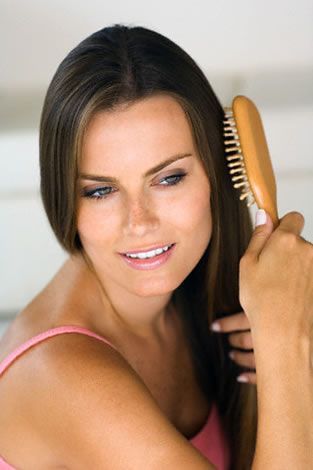
A brush can do more damage than a hair dryer if used incorrectly and too vigorously. Choose a brush made of soft, pliable plastic because plastic is far smoother and is kinder to hair than abrasive boar bristles and natural bristles. And look for a brush whose bristles are ball-tipped. Natural bristles are typically barbed at the ends and tightly packed which can cause unnecessary trauma to hair.
Vented brushes allow for smoother brushing and more even heat dispersion during blow-drying, allowing hair to dry faster and without “hot spots” that can burn the scalp and hair. Brush your hair lightly, and if possible, use a wide-toothed comb — the gentlest option of all. You can also look for the new generation of plastic combs at the drugstore; infused with hydrators like macadamia nut oil, they're particularly useful if your hair and scalp are dry and you’re prone to static and flyaways.


Use Sun Shields

The sun's dangerous UV rays are no friend to your skin — and that includes your scalp. Prolonged sun exposure can burn your scalp and cause itching from dehydration. Repeated exposure can dry out your hair and making it feel and look brittle, aging it the way sun exposure ages skin — giving it a coarser, dryer texture. Most importantly, you also need to guard against skin cancer — dangerous scalp moles often escape notice until it’s too late. If you part your hair while in the sun apply a waxy sunscreen stick or SPF lip balm to your part for protection.